
The Mistake Most People Make First
When a garage door won't budge on a freezing Kaysville morning, the instinct is to mash the remote button again and again, or grab a kettle of hot water and pour it along the bottom of the door. Both feel like reasonable fixes — the remote because surely one more try will do it, and the hot water because it melts the ice fast and you can see it working. The problem is what happens next. Repeated button-mashing forces the opener motor against resistance it was never meant to push through, which can strip the drive gear or burn out the circuit board. And that hot water? It melts the ice, runs under the door, and refreezes within the hour as a thicker, harder sheet than what you started with, thanks to the sharp day-to-night temperature swings this area gets. The door is often worse off than before you touched it.
Symptoms to Notice Before You Do Anything
Before chasing a cause, pay attention to exactly how the door is misbehaving. The symptom usually points straight to the problem.
- Door won't move at all, and the opener hums or clicks but nothing happens — often a physical obstruction like ice, not an opener failure.
- Door opens a few inches, then reverses or stops — the opener's safety sensors are reading resistance and backing off, which can be ice, a stiff spring, or a dragging track.
- Door moves, but slowly and unevenly, almost jerking along the track — points to lubrication or roller problems rather than a full blockage.
- Visible frost or a glaze of ice along the bottom seal or where the door meets the slab — a strong sign of a frozen threshold.
- Door feels unusually heavy when operated manually, more than normal for the time of year — suggests the spring tension itself is affected.
Cause #1: The Bottom Seal Frozen to the Concrete
This is the most common culprit and the first thing worth checking, since it's visible without any tools. Dry air plus snowmelt that refreezes overnight is a near-perfect recipe for this: snow or slush gets pushed under the door during the day, the sun warms the slab enough to melt a thin layer, and once the sun drops and temperatures fall hard after dark, that moisture freezes solid, gluing the rubber seal to the concrete.
The fix: Don't pull or pry. Use a plastic scraper (not metal, which can tear the seal) to work along the length of the door and break the ice bond gently. A hair dryer or heat gun run slowly along the seal line works better than hot water, since it doesn't leave standing liquid behind to refreeze. Once it's free, dry the area and consider sweeping snow away from the door's path before it has a chance to melt and refreeze under it again.
Cause #2: Stiff Rollers and Dirty Tracks
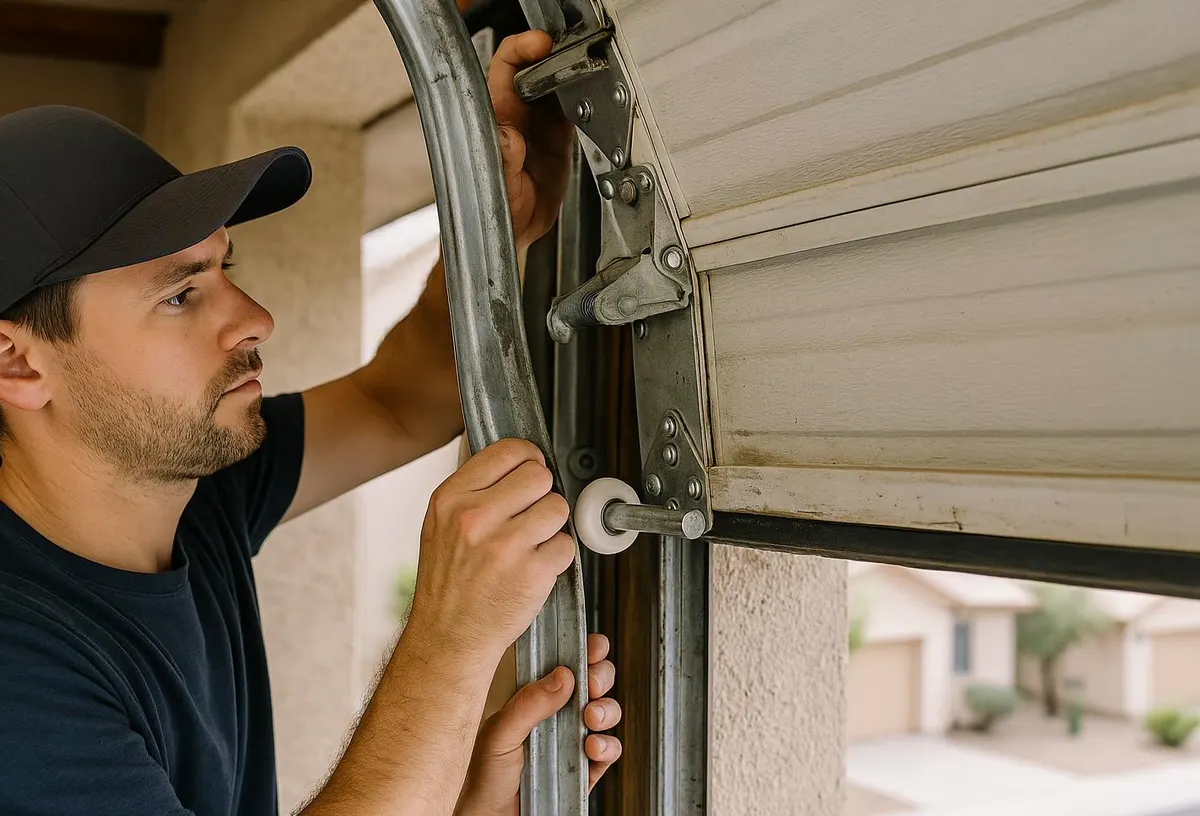
If the seal isn't the issue, or the door drags even after it's free, the next thing to check is the rollers and tracks. Standard lubricant thickens in cold weather, and any dust or grime mixed with moisture in the track can freeze into a gritty paste that makes the rollers bind.
The fix: Wipe the tracks clean with a dry cloth, then apply a silicone-based garage door lubricant to the rollers, hinges, and track — not WD-40, which is a solvent that actually strips lubrication rather than adding it long-term. A light coat of lithium grease on the hinges helps them move smoothly through the bigger temperature swings this area sees between day and night.
Cause #3: Torsion Spring Behaving Differently in the Cold
If the door still feels heavy or the opener strains even after the seal and tracks are addressed, the torsion spring deserves a look. Metal contracts in cold temperatures, and a spring that's already near the end of its life can lose just enough tension to make the door feel noticeably heavier on frigid mornings, even though it worked fine in October.
The fix: This is not a DIY adjustment. Torsion springs are under extreme tension and adjusting or replacing them requires the right bars and technique. A technician will check the balance by disconnecting the opener and testing how the door holds position manually — if it slides down or shoots up on its own, the spring needs replacement.
Cause #4: Opener Settings Not Matched to Winter Conditions
If the door is physically free and moving but the opener keeps reversing or stalling, the force and limit settings may need adjusting. Cold-stiffened components mean the door takes slightly more effort to move through its cycle, and opener sensors set for summer conditions can misread that extra resistance as an obstruction.
The fix: A small adjustment to the force settings on the opener, along with a check of the gear and chain or belt lubrication, usually resolves this. It's worth having this checked alongside the spring, since the two often interact — a slightly weak spring makes the opener work harder, which trips the safety reversal more easily in the cold.
Cause #5: Cracked or Brittle Weatherstripping
Last on the list, but worth a glance: vinyl weatherstripping gets stiff and can crack after repeated freeze-thaw cycles. A cracked seal won't stop the door from moving, but it lets in drafts and can catch unevenly on the slab, contributing to the sticking feeling some homeowners mistake for a bigger mechanical problem.
The fix: Replacement strip is inexpensive and straightforward, and doing it before the coldest stretch of winter hits prevents bigger headaches later.
When to Call Kaysville Garage Door Specialists
If the door is frozen shut and you can't safely free it, or it's reversing, stalling, or feels dangerously heavy, that's the point to stop troubleshooting and call. We offer Emergency Garage Door Service for doors that are stuck or unsafe to operate, and Garage Door Maintenance visits that cover exactly the checks above — seals, tracks, rollers, spring tension, and opener settings — before winter's hardest freezes set in. If a spring is the issue, we handle Spring Replacement safely with the right tools, every time.
If your garage door is fighting you this winter, call Kaysville Garage Door Specialists. We serve homeowners throughout Kaysville, Layton, Farmington, Fruit Heights, Centerville, Bountiful, Clinton, and Syracuse, and we're ready to get your door moving reliably again before the next cold snap.