
What It Costs to Wait Until Spring
A garage door that won't open isn't just an inconvenience you can work around for a few months. If the cause is a broken spring, the opener will keep straining against a door it can't lift, which can burn out the motor or strip the gears — turning a $150-$350 spring replacement into a $300-$600 opener repair or replacement. If it's a sensor or track issue, you're probably forcing the door by hand in the meantime, which is how people pull a cable loose or knock a panel off its roller. And once the hard freezes of a Davis County winter set in, cold metal gets more brittle and lubricant thickens, so marginal parts that were barely hanging on in October often fail outright in January. Diagnosing this now, while the weather still cooperates, is cheaper than doing it in a driveway during a snowstorm.
The Symptoms Worth Noting Before You Call Anyone
Before troubleshooting, pay attention to exactly what the door does — it narrows things down fast:
- Nothing happens at all — no light, no hum, no click when you press the remote or wall button.
- You hear a hum or click, but the door doesn't move — the opener has power but isn't engaging the door.
- The door opens partway and reverses or stops — often a sensor or obstruction issue.
- The door won't budge even when you try to lift it by hand — this points to a spring or cable problem, not the opener at all.
Try This First
If the opener light doesn't come on, check whether it's actually plugged in and that the outlet has power — a tripped GFCI outlet in the garage is a common, embarrassingly simple culprit, especially if you've recently had hard frost or condensation in the garage. Also check the remote batteries and make sure the wall switch isn't stuck.
The Order a Technician Checks Things
1. Power and Connection
First stop is always the opener unit itself: power supply, circuit breaker, and whether the wall control panel is wired correctly. This takes minutes to rule out and avoids charging you for anything more involved than it needs to be.
2. Safety Sensors
Every modern opener has two photo-eye sensors near the bottom of the tracks that must have a clear, aligned line of sight. If they're knocked out of alignment — which happens easily if a bike or car bumper clips one — the door won't close, and on some models won't open either. Direct sun angle during low-altitude winter light can also wash out the sensor's receiver briefly, giving an intermittent symptom that looks like a bigger problem than it is. The fix is simply realigning or cleaning the lenses, which a tech checks before touching anything mechanical.
3. The Manual Disconnect
If the red emergency release cord has been pulled — sometimes by accident during a power outage — the opener is disengaged from the door entirely. Reconnecting it is a two-minute fix, but it's often overlooked because people assume something is broken.
4. The Opener's Motor and Logic Board
If power is good and sensors are aligned but the unit still won't respond, the next check is the opener's internal components — the circuit board, capacitor, or motor itself. Dry, cold air here means these parts rarely fail from humidity corrosion the way they might elsewhere, but age and the sheer number of open-close cycles over the years still wear them out. Depending on the opener's age, repair or full opener replacement gets weighed here based on cost versus remaining lifespan.
5. Torsion or Extension Springs
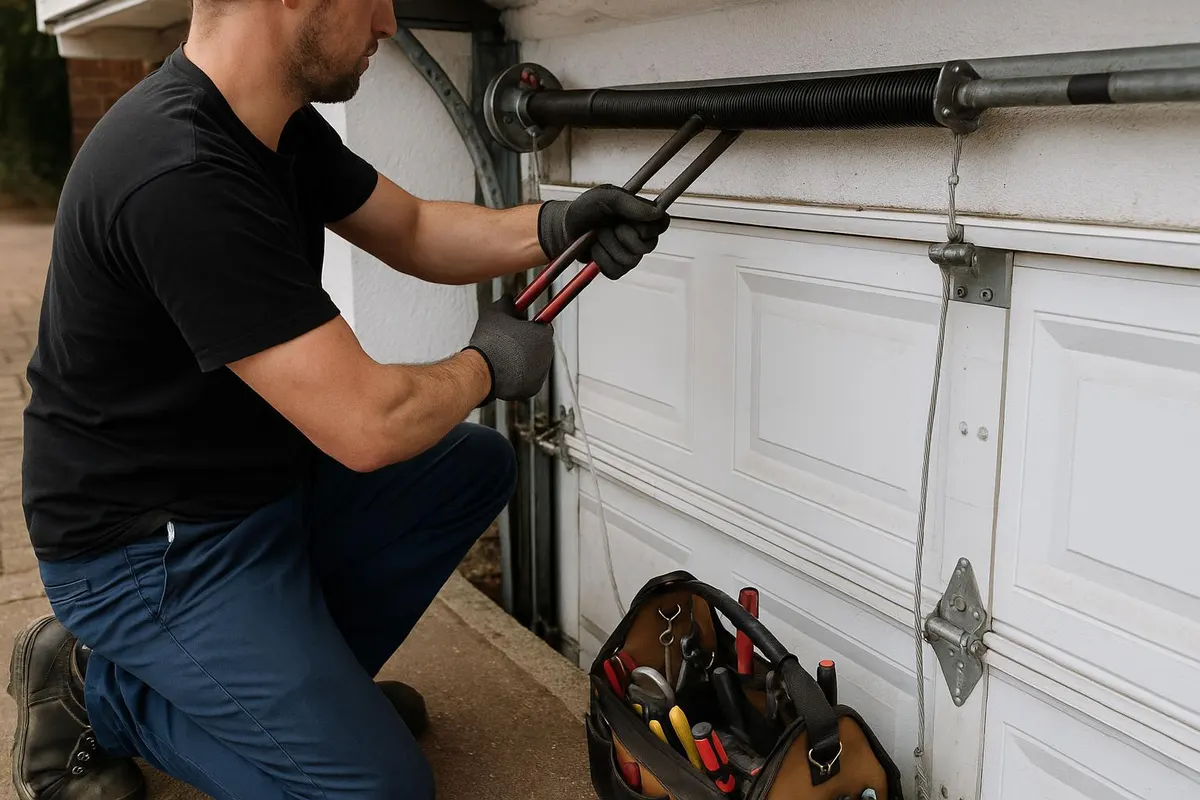
This is where it stops being an opener problem and becomes a door problem. If the door won't move even with the opener disconnected and someone lifting manually, a spring has likely snapped. Garage doors are heavy — often 130-400 lbs — and the springs do almost all the lifting work; the opener just guides it. Cold temperatures make springs more prone to snapping because metal contracts and loses some flexibility, which is why broken springs spike through the coldest months. This is also the most dangerous repair to attempt yourself: springs are under extreme tension, and replacement should be left to someone with the right bars and clamps.
6. Cables and Tracks
A tech checks whether the lift cables are still wound and seated on the drum, or whether they've slipped off — often a result of the same spring failure, or a track that's bent from an impact. Big day-to-night temperature swings cause metal tracks to expand and contract repeatedly, which over years can loosen mounting brackets and nudge tracks out of alignment. A summer hailstorm that dented the door itself can also throw a track out of true, which won't always be obvious until the door starts binding.
7. Rollers and Hinges
Last on the list because it rarely causes total failure, but worn or dry rollers make the door fight the opener, drawing more current and shortening motor life over time. The region's dry air dries out standard grease faster than homeowners expect, so rollers that haven't been lubricated in a year or two are often part of the problem even when they're not the main cause.
When to Call Kaysville Garage Door Specialists
If you've ruled out power and the remote and the door still won't move, it's time to call. For anything spring- or cable-related, don't attempt it yourself — our Spring Replacement service handles that safely with the right tools. If the opener itself seems to be the problem, our Opener Repair & Installation service can diagnose whether it's worth repairing or time to replace, and we'll give you a straight answer either way. We serve Kaysville, Layton, Farmington, Fruit Heights, Centerville, Bountiful, Clinton, and Syracuse, and we show up on time with fair, upfront pricing.
If your garage door in Kaysville, UT isn't opening, call Kaysville Garage Door Specialists today — we'll get it fixed before winter makes it worse.